
When working with electrical and wiring projects, ensuring a secure and reliable termination is paramount. For high-amperage applications, compression lugs are the industry standard for connecting cables to busbars, circuit breakers, or batteries. Selecting the right terminal involves not just matching the wire gauge, but also choosing the correct barrel length. This guide breaks down the differences between short barrel and long barrel lugs to help you optimize your electrical connections.
At the core of any robust electrical system is the humble 8 awg lug, designed to handle moderate power loads efficiently without introducing excess resistance. Whether you are wiring car audio systems, golf carts, or renewable energy setups, understanding the physical and mechanical differences between lug variations ensures safety and longevity. When sourcing these components, especially for power storage setups, you will often find them listed specifically as 8 gauge battery lugs, which are engineered to interface perfectly with standard battery terminals and high-strand-count cables.
Understanding Compression Lugs
Compression lugs (also known as mechanical or crimp lugs) are designed to be compressed onto a stripped wire using a dedicated crimping tool. The physical structure of the lug consists of two main parts: the tongue (or pad) that bolts to the connection point, and the barrel where the bare wire is inserted.
The barrel essentially acts as a sleeve. When crimped, it exerts intense pressure on the wire strands, breaking down any air gaps between them and forming a solid, homogenous mass of metal. This low-resistance connection prevents overheating, voltage drop, and potential fire hazards. However, the length of this sleeve can vary significantly depending on the application demands.
Short Barrel Lugs: Features and Best Uses
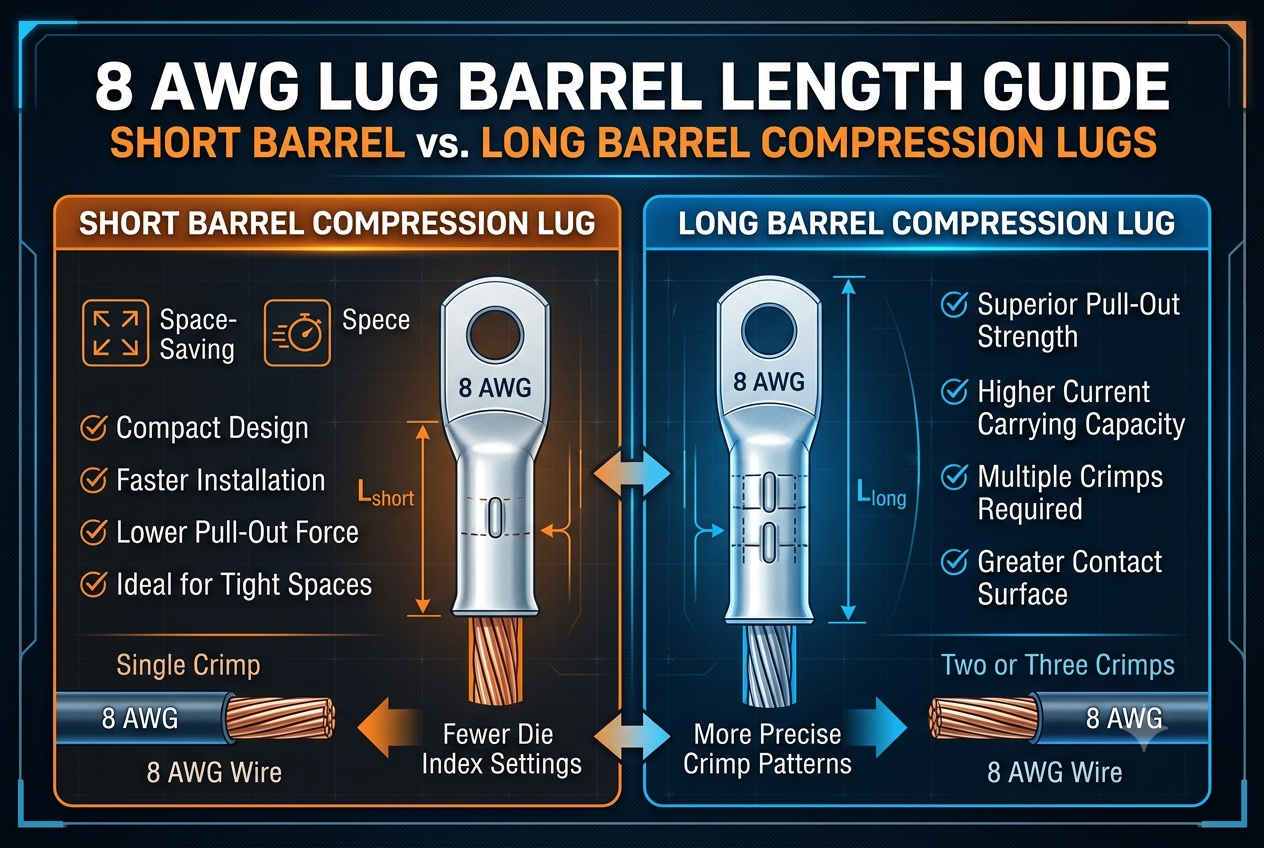
Short barrel compression lugs feature a compact sleeve designed to accommodate a single standard crimp.
- Space-Saving Design: The primary advantage of a short barrel is its compact footprint. It fits easily into tight enclosures, cramped junction boxes, and shallow terminal blocks where space is strictly limited.
- Faster Installation: Because the barrel is shorter, it requires fewer crimps (often just one or two, depending on the die and crimper used). This speeds up installation time when you have dozens of connections to make.
- Cost-Effective: Generally, short barrel lugs require less raw material to manufacture, making them slightly more affordable for large-scale projects.
- Ideal Applications: They are perfectly suited for standard vibration environments, indoor installations, and general-purpose wiring where the cable is not subjected to heavy mechanical pulling forces or extreme environmental stress.
Long Barrel Lugs: Features and Best Uses
Long barrel lugs feature an extended sleeve—roughly double the length of their short barrel counterparts—designed to provide increased surface area for multiple crimps and enhanced mechanical support.
- Superior Mechanical Strength: The extended sleeve allows for two or more crimps. This distributes mechanical stress over a larger area, making the connection highly resistant to vibration, tension, and pulling forces.
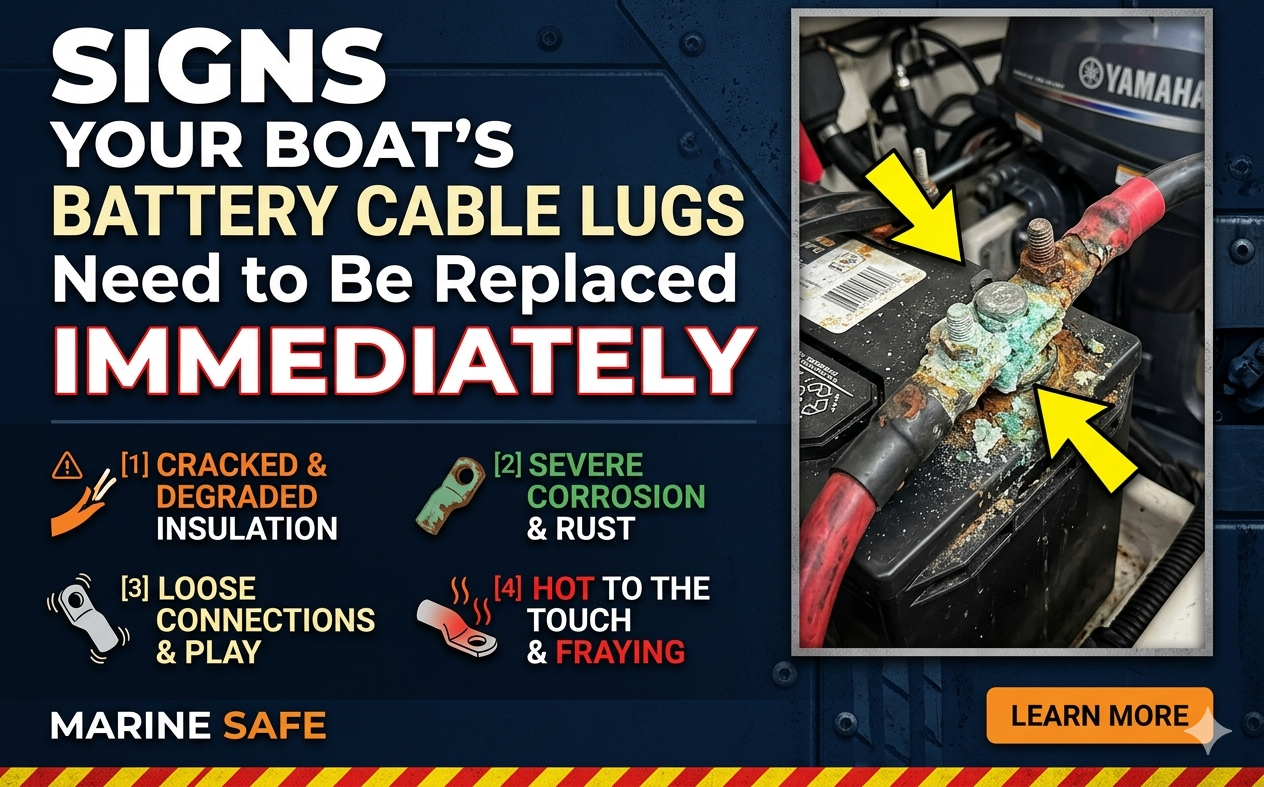
- Enhanced Environmental Sealing: The extra length provides ample room to apply heat-shrink tubing with adhesive lining. This completely seals the junction against moisture, dust, and corrosive elements, which is critical in harsh or outdoor environments.
- Higher Ampacity and Conductivity: While the current capacity is primarily determined by the wire gauge, the increased contact surface of a long barrel ensures an extremely stable, low-resistance path for demanding electrical loads.
- Ideal Applications: Long barrel variants are the go-to choice for heavy-duty industrial machinery, marine environments, automotive engine bays, and off-road vehicles where wires are subjected to constant movement and harsh weather conditions.
Key Differences at a Glance
| Feature | Short Barrel Lugs | Long Barrel Lugs |
|---|---|---|
| Barrel Length | Standard/Compact | Extended (approx. 2x standard) |
| Crimp Count | Usually 1 crimp | 2 or more crimps |
| Space Requirement | Low (great for tight areas) | High (needs more clearance) |
| Vibration Resistance | Moderate | High (heavy-duty) |
| Environmental Sealing | Basic | Excellent (ideal for heat-shrink) |
Critical Considerations for Installation
Regardless of which barrel length you choose, proper installation techniques are non-negotiable. Always use a calibrated crimping die that matches the lug specification. Never use makeshift tools like pliers or hammers to crimp compression terminals, as this will result in a faulty connection with high electrical resistance.
Furthermore, strip the insulation carefully so that the bare conductor fully occupies the barrel without extending past it, but ensuring no copper strands are left exposed outside the sleeve. For 8 gauge battery lugs, applying a layer of anti-oxidant joint compound to the stripped wire before crimping can further prevent galvanic corrosion between dissimilar metals (such as tinned copper lugs and aluminum or lead terminals).
Making the Right Choice for Your System
Selecting between short and long barrel lugs ultimately boils down to evaluating your physical workspace and the operating environment. If you are working in a tight dashboard or a compact electrical panel, the space-saving nature of a standard 8 awg lug with a short barrel will make your installation much easier and cleaner. Conversely, if you are wiring an exposed winch, an engine compartment, or a marine battery bank, investing in the extra real estate of 8 gauge battery lugs with long barrels will pay off in long-term reliability, vibration resistance, and protection against corrosion. Always prioritize mechanical stability and environmental protection whenever your wiring is subject to movement or the elements.