
Out on the open water, your boat’s electrical system is its lifeline. It starts your engine, runs your navigation gear, powers your bilge pumps, and keeps your safety equipment operational. At the heart of this system is the battery, but even the best marine battery is useless without a solid connection. That is where marine battery cable lugs come into play.
Battery lugs are the heavy-duty terminals that connect your thick battery cables to the battery posts or switches. Because they operate in a harsh, damp, and often salty environment, they are prone to severe wear and tear. Ignoring failing lugs can lead to a dead engine, electrical fires, or being stranded miles from shore.
Here are the critical warning signs that your boat’s battery lugs copper connections are failing and need to be replaced immediately.
1. Visible Green or White Powdery Corrosion
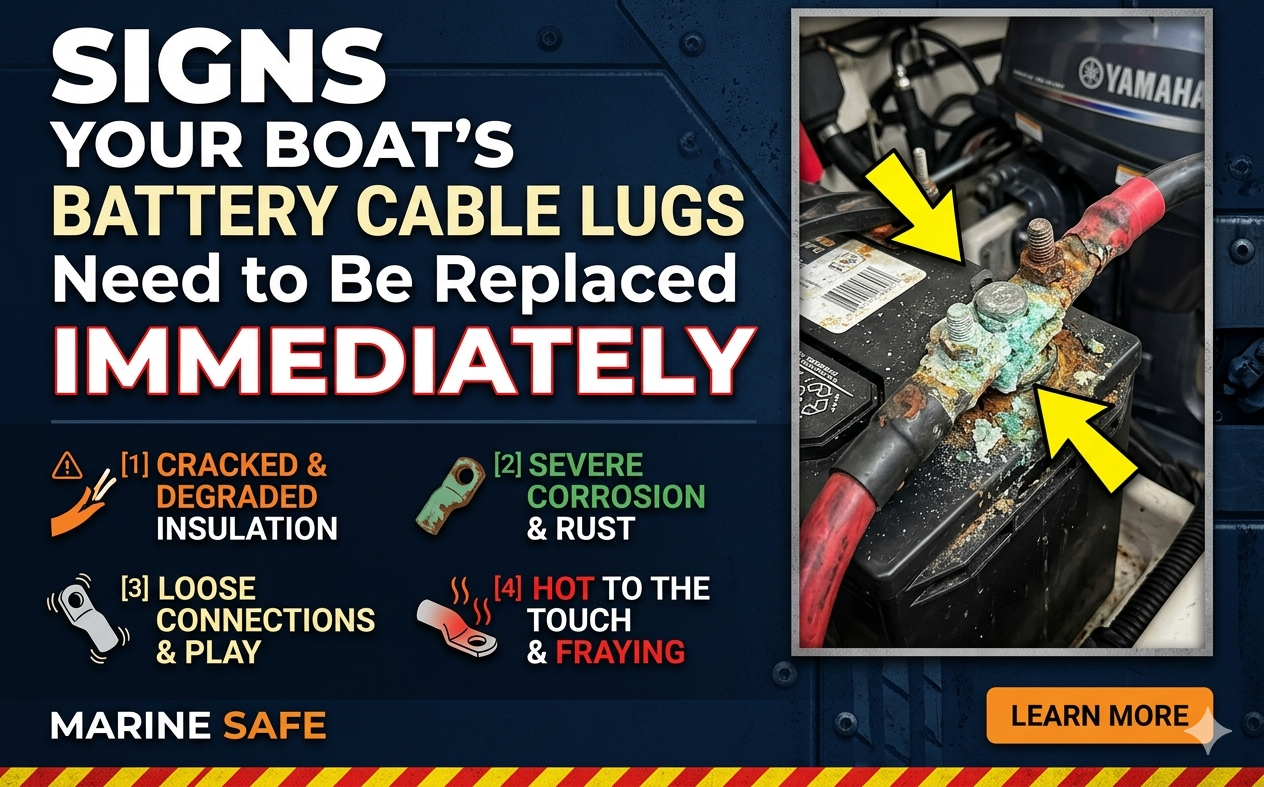
The most obvious sign of trouble is the buildup of crusty green, white, or blue powder around the battery terminals and lugs. This is a byproduct of chemical reactions between the battery gases, moisture, and the metal of the lug.
While a tiny amount of surface oxidation can happen, a heavy buildup indicates that the connection is compromised. Corrosion acts as an insulator, drastically increasing electrical resistance. This restricts the flow of current from the battery to your boat’s electrical components, leading to intermittent power or a completely dead system. If cleaning the lug reveals pitted, thin, or structurally weakened metal, immediate replacement is required.
2. Brittle, Cracked, or Exposed Copper
Take a close look at where the cable enters the lug. High-quality marine battery cable lugs are usually sealed with adhesive-lined heat shrink tubing to keep moisture out. Over time, heat, UV rays, and physical stress can cause this protective barrier to crack or degrade.
If you can see bare, exposed battery lugs copper wiring or if the lug itself shows hairline cracks, it is a ticking time bomb. Marine environments will quickly oxidize exposed copper, turning it brittle and black. Brittle copper wires break easily under the natural vibration of a boat, which can lead to a sudden, total loss of electrical power while you are underway.
3. The Engine Cranks Slowly or Clicks
When you turn the key or press the start button, does your boat’s engine groan, crank sluggishly, or emit a rapid clicking sound? While many boaters immediately blame a dying battery, the culprit is frequently a degraded cable lug.
Starting a marine engine requires a massive, instantaneous draw of electrical current. If the battery lugs are corroded, loose, or damaged, they cannot handle the high amperage. The resistance chokes the current, leaving the starter motor starved for power. If your battery tests fine on a multimeter but the engine still struggles to crank, look straight at your lugs.
4. Excessive Heat at the Terminals
Electricity flowing through resistance generates heat. If your battery cable lugs are suffering from internal corrosion or a poor crimp, they will become bottleneck points for electrical current.
After trying to start the boat or running heavy electronics (like an anchor windlass or a high-powered stereo), carefully feel the battery terminals (ensure the system is off and use caution). If the lugs feel hot to the touch, or if you notice the plastic insulation or heat shrink tubing around the lug is melting, bubbling, or charred, you have a major hazard on your hands. This resistance-induced heat is a leading cause of marine electrical fires.
5. Loose or Wobbly Connections
A secure electrical connection must be mechanically tight. If you can wiggle the battery lug by hand—even after tightening the terminal nut—the lug or the cable end is compromised.
On a boat, vibrations from waves and the engine are constant. A loose lug will bounce, causing intermittent contact. This can trigger random electronics shutdowns, prevent the alternator from properly charging the battery, and create electrical arcing. Arcing can instantly destroy electronics and ignite ambient fuel vapors in the engine compartment. If a lug cannot be clamped down perfectly flush and tight, it must be cut off and replaced.
Why You Should Choose High-Quality Replacements
When it comes time to replace your compromised lugs, do not grab standard automotive parts from a local hardware store. Marine electrical systems demand specialized components.
- Opt for Tinned Copper: Look for marine battery cable lugs made from high-grade battery lugs copper that has been entirely electro-tinned. The tin plating provides a crucial shield against the corrosive marine air, preventing the copper underneath from turning into green mush.
- Heavy Wall Thickness: Marine lugs feature a thicker wall design to handle heavy vibration and ensure a massive, highly conductive surface area for maximum current transfer.
- Proper Sealing: Always seal the new connection with adhesive-lined heat shrink tubing. When heated, the internal glue melts and creates a watertight barrier, locking out moisture and salt air for years to come.
Summary Checklist for Boat Inspection
To keep your vessel safe, make checking your battery cables a regular part of your pre-season and monthly maintenance.
| Sign of Trouble | Immediate Risk | Action Required |
|---|---|---|
| Heavy green/white powder | High electrical resistance, dead battery symptoms | Clean or replace lug if metal is pitted |
| Cracked heat shrink or bare copper | Rapid corrosion, wire breakage from vibration | Cut back cable, crimp new tinned-copper lug |
| Sluggish engine cranking | Starter motor failure, getting stranded | Test battery; if good, replace faulty lugs |
| Hot or melting terminals | Severe fire hazard | Stop using the boat immediately and replace lugs |
| Loose/wobbly fit | Electrical arcing, component damage | Replace the deformed lug and tighten to spec |
Your boat’s electrical system is only as strong as its weakest link. By keeping an eye out for these five warning signs and upgrading to premium marine battery cable lugs, you can ensure your days on the water are defined by smooth sailing rather than unexpected towing.